

Enterprise Knowledge Model™
“Create Once. Use Many”.
The Enterprise Knowledge Model™ is the enterprise blueprint that enables consistent business meaning across data platforms, analytics, and AI systems.
What the Enterprise Knowledge Model™ Represents
The Enterprise Knowledge Model™ is not a diagram—it is the governed structural blueprint of enterprise knowledge.
It defines how business meaning, structure, and identity are consistently represented across the organization, independent of any single system or platform.
Produced and governed through Enterprise Knowledge Architecture™, it becomes the foundation from which all data platforms, analytics models, and semantic systems are derived.
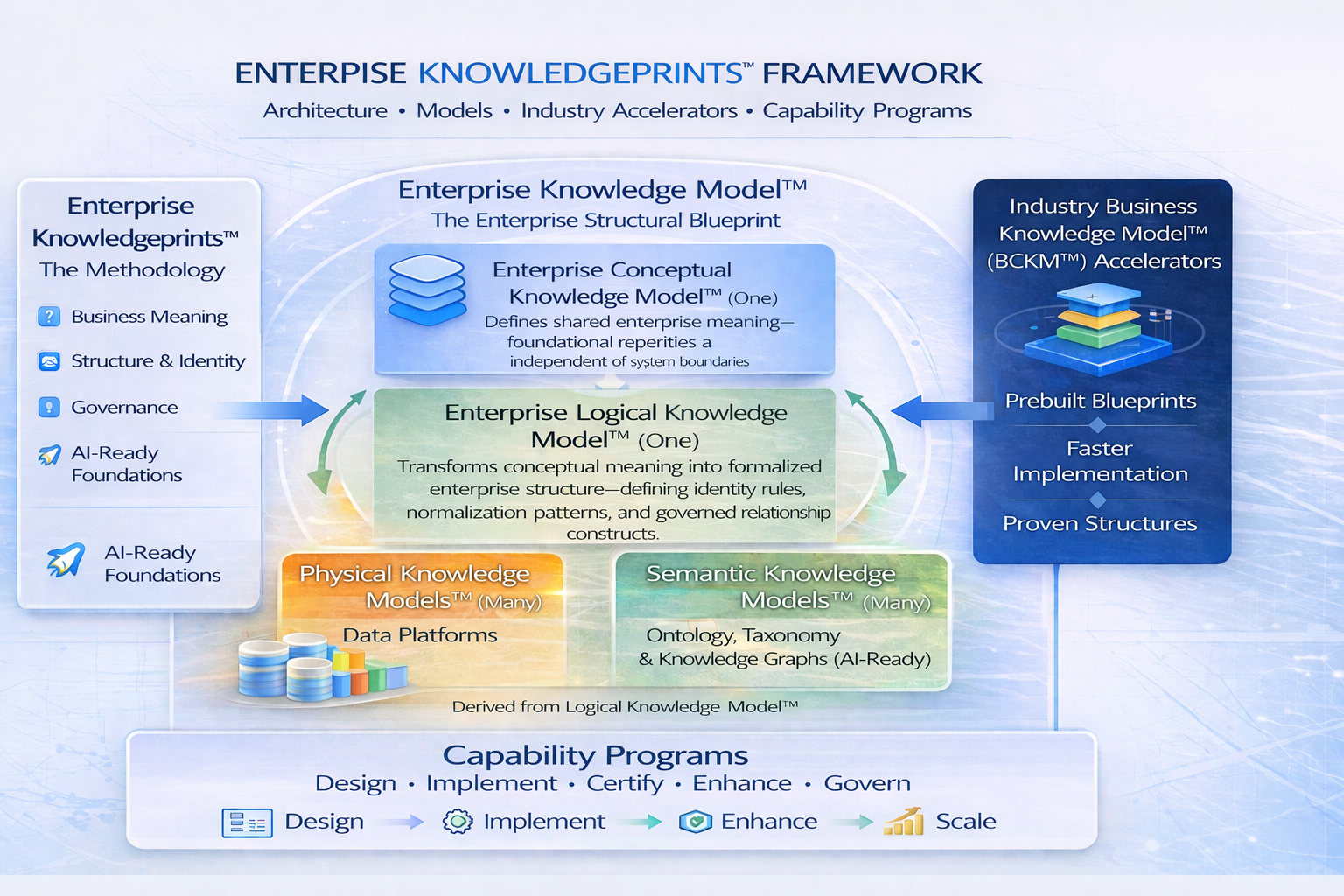
It defines the core business entities, identity structures, and governed relationships that create consistent meaning across enterprise systems, analytics platforms, and AI solutions.
It establishes the structural enterprise blueprint that ensures:
Consistent definition of business identity across the enterprise
Governed relationship structures that enforce meaning—not just storage
Controlled and scalable domain expansion
Structural alignment across systems, platforms, and data products
Durable semantic interoperability for analytics and AI
The Enterprise Knowledge Model™ Stack
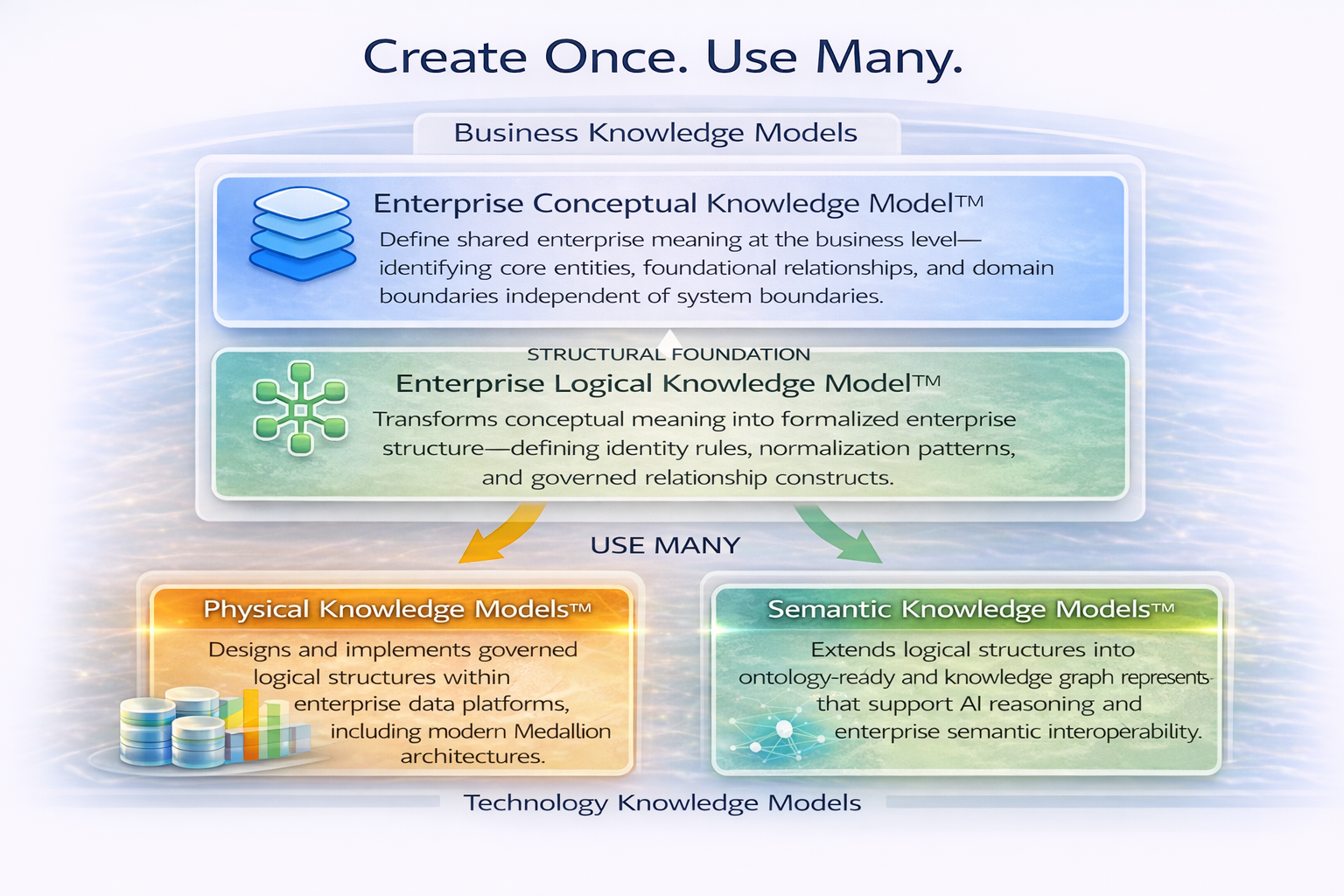
Both the Physical Knowledge Model™ and the Semantic Knowledge Model™ are derived from — and governed by — the Enterprise Logical Knowledge Model™, ensuring reusable structure and consistent enterprise systems.
What the Enterprise Knowledge Model™ Enables
Alignment Across ERP, Analytics, and AI Platforms
🔗 Reduced integration volatility
🧩 Predictable domain extension
🔄 Durable semantic interoperability
📈 Enterprise knowledge that compounds in value over time
The Enterprise Knowledge Model™ provides the structural meaning foundation that enables multiple enterprise initiatives to operate from the same semantic foundation.
Instead of maintaining separate models for governance, analytics architectures, and knowledge graphs, the Enterprise Knowledge Model becomes the shared semantic backbone that connects these initiatives.
This approach dramatically reduces duplication and ensures consistent business meaning across enterprise systems, analytics platforms, and AI solutions.
The Enterprise Knowledge Model™ transforms enterprise complexity into governed, reusable structural capability