
Enterprise Knowledge Architecture™
A governing discipline for designing durable enterprise knowledge
before systems, platforms, and AI fragment it.
The Distinction: Methodology vs. Model
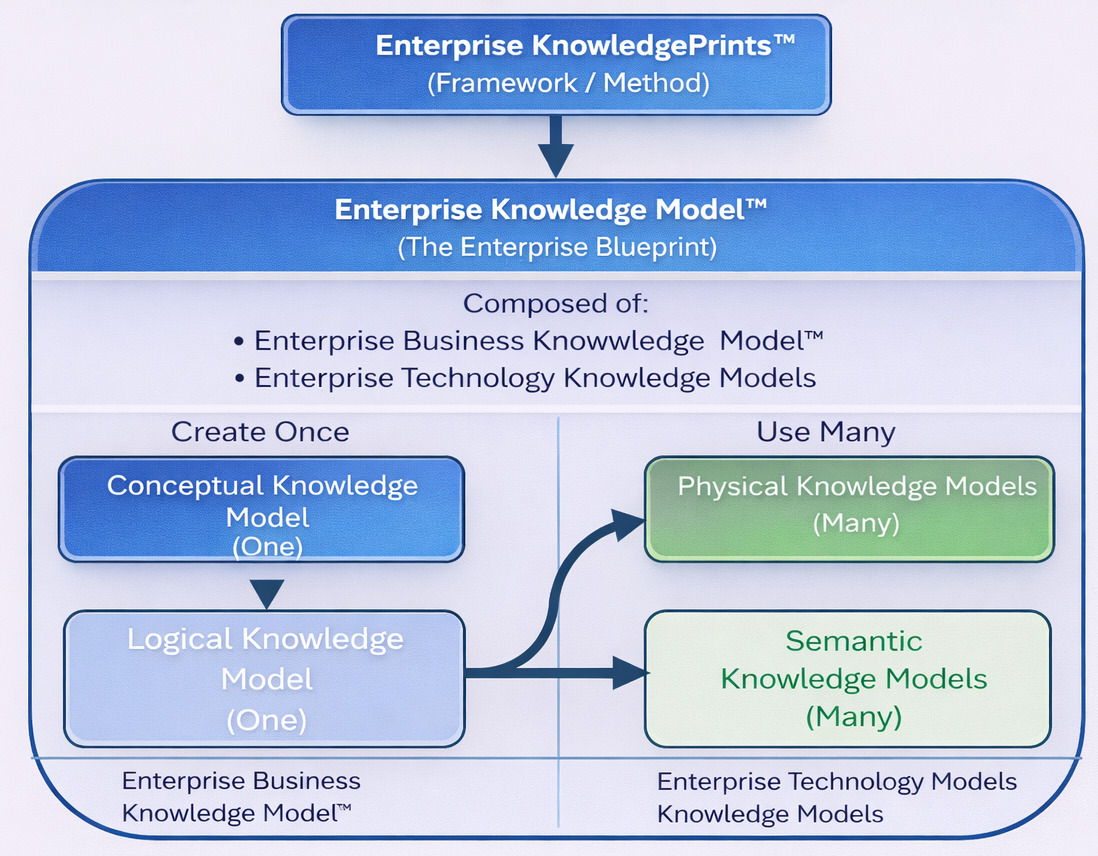
Enterprise KnowledgePrints™ Framework defines the method used to design enterprise knowledge models.
Enterprise Knowledge Architecture™ is the discipline of applying that method.
The Enterprise Knowledge Model™ is the structural blueprint produced by that discipline — enabling consistent implementation across data platforms, analytics systems, and AI environments.
Enterprise Knowledge Architecture™
Enterprise Knowledge Architecture™ is the disciplined practice of designing enterprise knowledge before implementation begins.
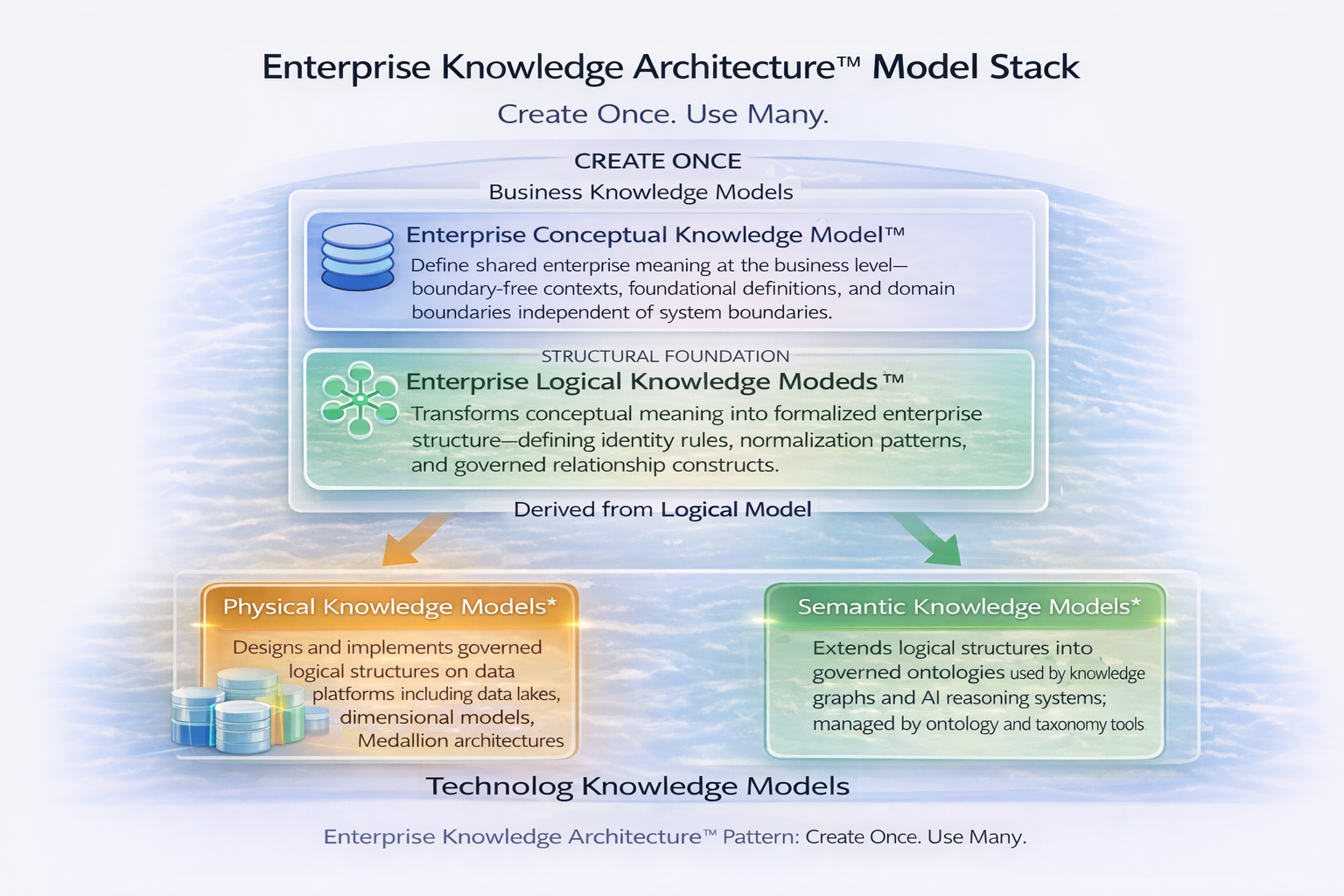
Create Once. Use Many.
It applies the Enterprise KnowledgePrints™ Framework to define business meaning, structure identity and relationships, and establish reusable Conceptual and Logical Knowledge Models.
These models form the enterprise blueprint — enabling consistent implementation across data platforms, analytics systems, and AI environments.
Architecture governs how enterprise knowledge is designed, formalized, and extended across the organization.
This discipline produces and governs the Enterprise Knowledge Model™, including both Business Knowledge Models and their downstream Technology Knowledge Models.
Enterprise KnowledgePrints™
(Framework / Method)
Enterprise Knowledge Model™
The Enterprise Knowledge Model™ is the unified structural blueprint produced through Enterprise Knowledge Architecture™.
It is composed of:
Business Knowledge Models (Conceptual and Logical) — create once
Technology Knowledge Models (Physical and Semantic) — use many(realized many times)
While the architecture governs the discipline, the model represents the structural outcome of that discipline.
The Enterprise Knowledge Model™ provides the shared foundation used by data platforms, governance frameworks, analytics systems, and AI environments.
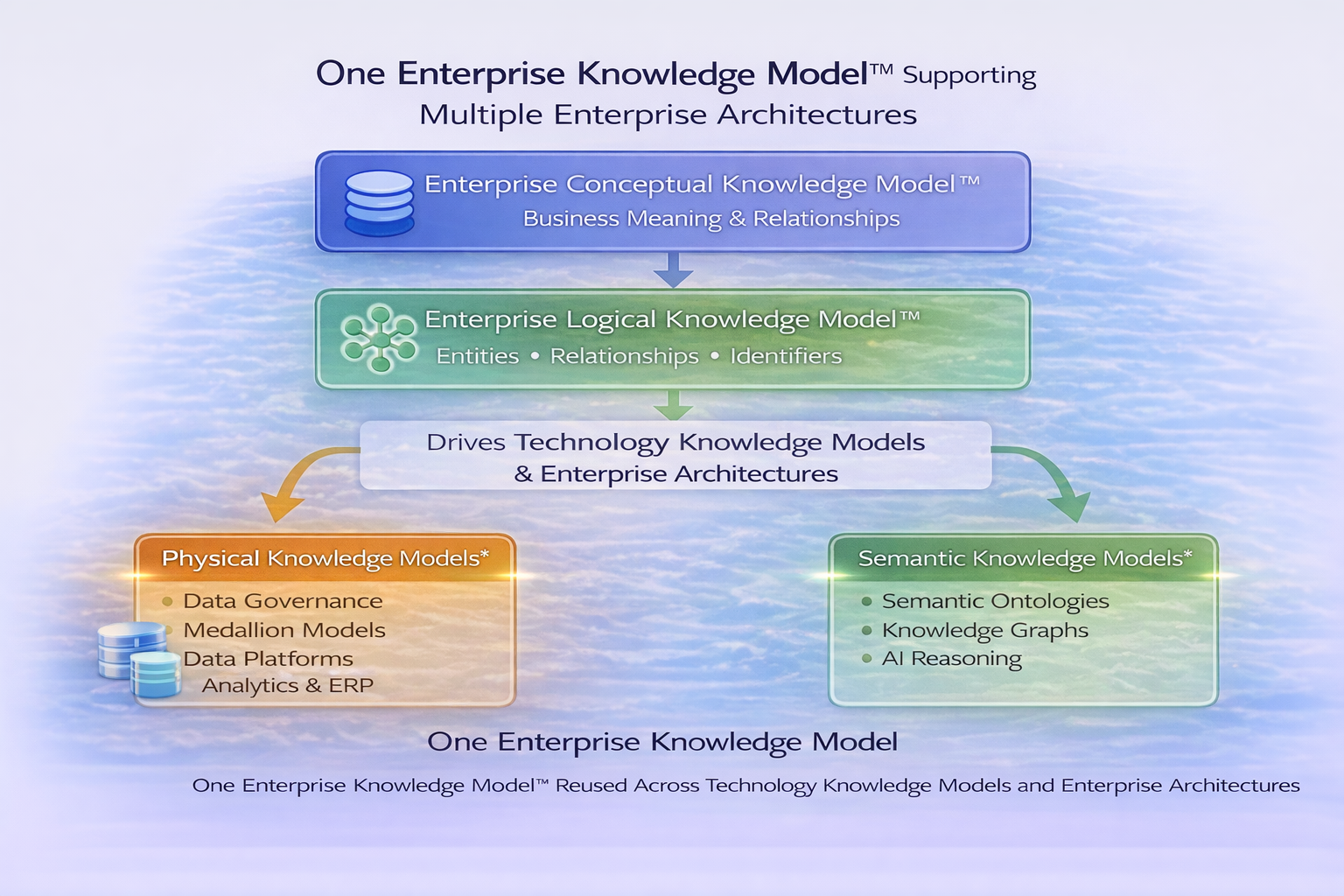
One Enterprise Knowledge Model™ Supporting Multiple Enterprise Architectures
Enterprise Knowledge Architecture™ establishes a single Enterprise Knowledge Mode™ composed of:
Business Knowledge Models
an Enterprise Conceptual Knowledge Model™
an Enterprise Logical Knowledge Model™
Technology Knowledge Models
many Physical Knowledge Models
many Semantic Knowledge Models
The Business Knowledge Models define the shared meaning and structural foundation of the enterprise before systems implement it.
Rather than creating separate Conceptual and Logical Knowledge Models for each data platform, governance initiative, or semantic system, the Business Knowledge Models serve as the structural foundation used across multiple enterprise architectures.
Foundation for Three Enterprise Capabilities
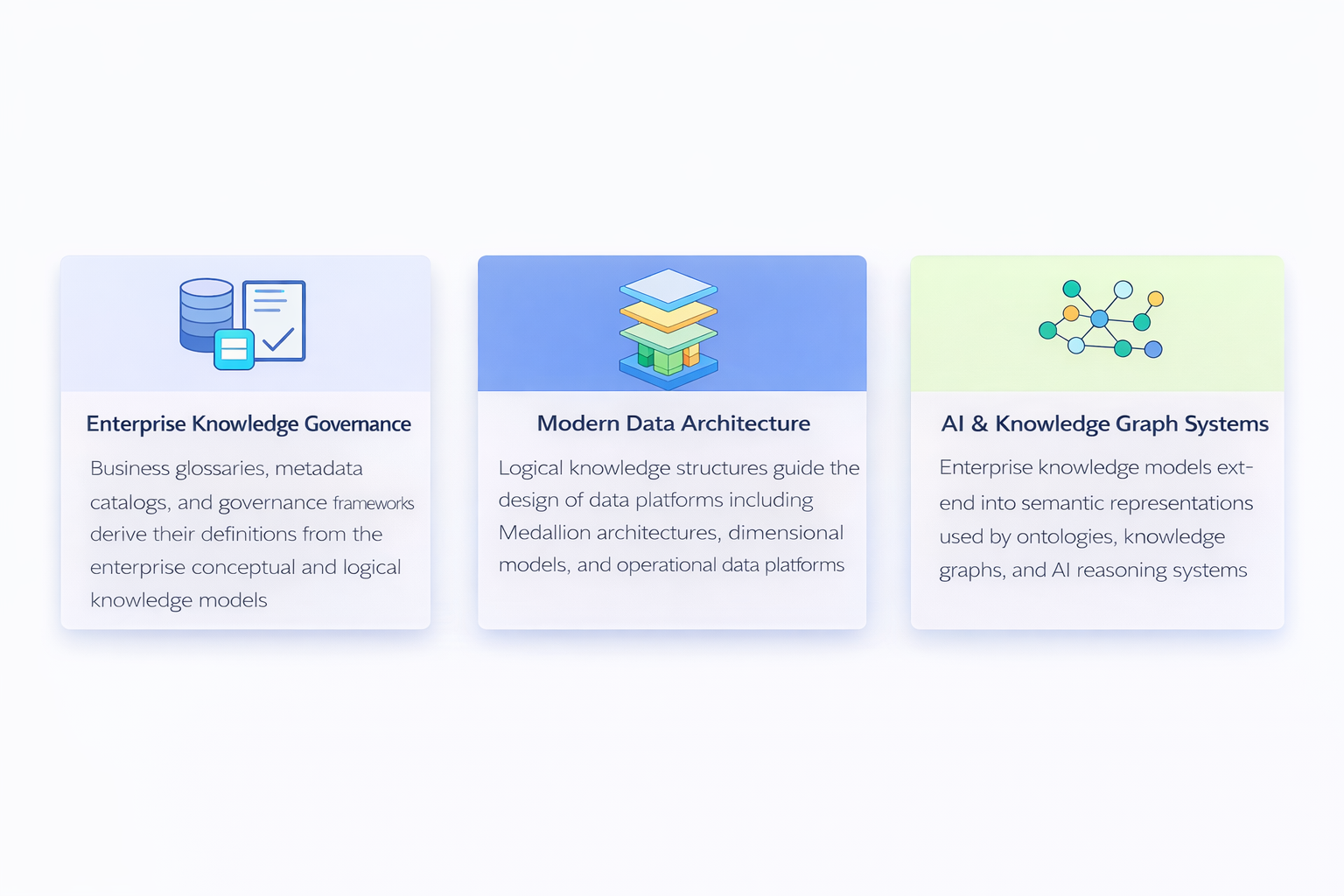
The Enterprise Knowledge Model™ provides the shared semantic and structural foundation for:
Data Governance
Business glossaries, data catalogs, and governance frameworks derive their definitions from the enterprise conceptual and logical knowledge models.
Modern Data Architecture
Logical knowledge structures guide the design of physical implementations including Medallion architectures, dimensional models, and operational data platforms.
AI and Knowledge Graphs
The same logical structures extend into semantic representations used by ontologies, knowledge graphs, and AI reasoning systems.
Foundation for A Unified Semantic Layer
By defining enterprise meaning through the Enterprise Conceptual Knowledge Model™ and the Enterprise Logical Knowledge Model™, organizations establish the shared semantic foundation of the enterprise before systems implement it.
The Enterprise Logical Knowledge Model™ defines the core business entities, relationships, identifiers, and structural meaning of the enterprise. Because these structures represent the governed business blueprint, they can be reused across multiple enterprise architectures without redefining business meaning.
For semantic architectures such as knowledge graphs and AI reasoning systems, the logical model provides the majority of the structural foundation required for ontology development.
In practice, the Enterprise Logical Knowledge Model™ provides approximately 75% of the semantic structure required for enterprise ontologies.
The Enterprise Logical Knowledge Model™ therefore serves as the semantic backbone of the enterprise, ensuring that knowledge graphs extend enterprise meaning rather than redefining it.
The remaining semantic constructs — including ontological classifications, reasoning hierarchies, and domain-specific extensions — are then modeled directly within ontology and taxonomy modeling platforms.
Because semantic models originate from the enterprise logical knowledge model, organizations avoid redefining business entities, terms, and relationships across AI, data platform, and governance initiatives.
Modern modeling tools such as ER/Studio can assist in extracting the enterprise logical structures used as inputs to ontology and taxonomy modeling environments.
This ensures that semantic models remain governed as part of the Enterprise Knowledge Model™ — the unified enterprise blueprint.
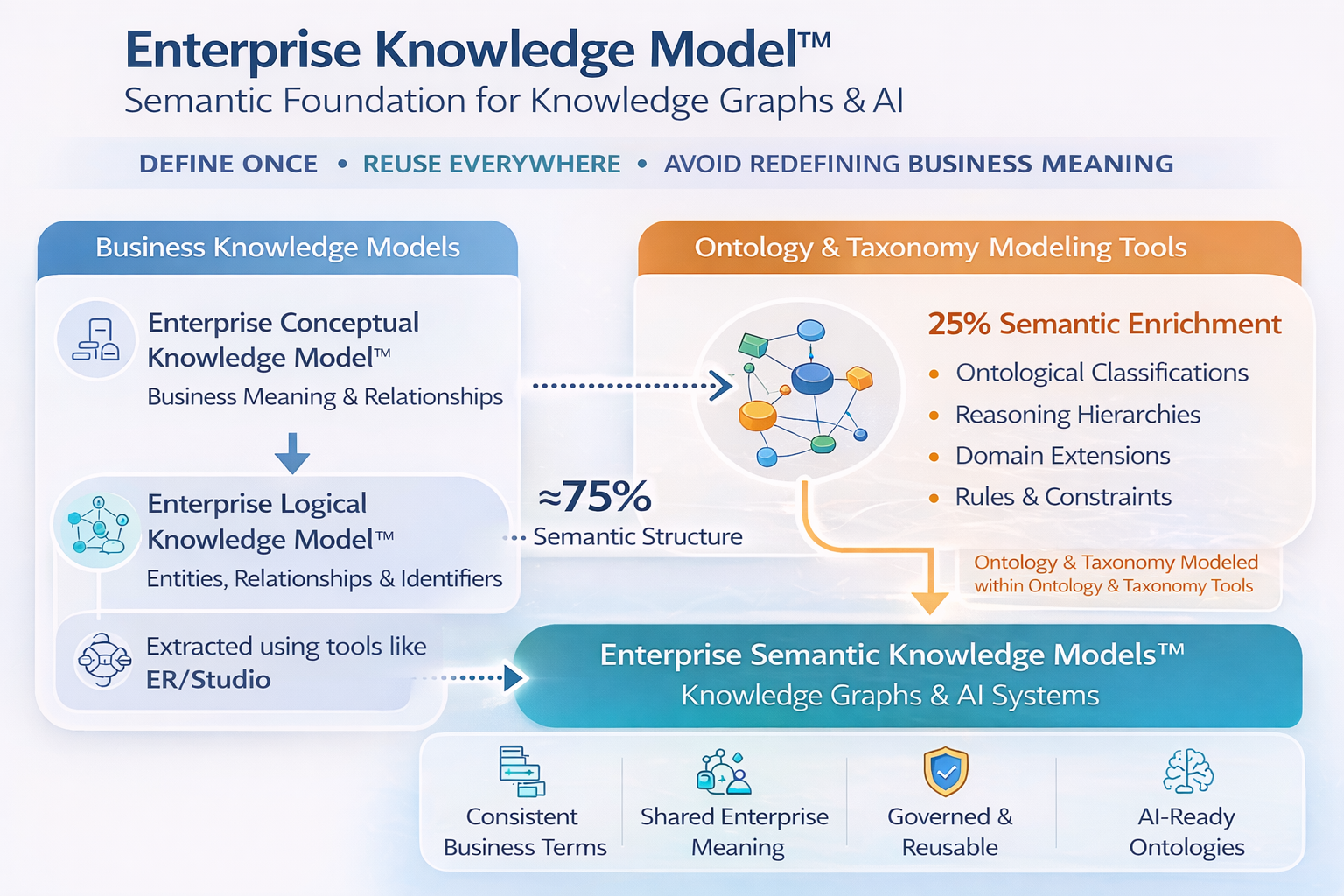
Enterprise Knowledge Model™ — Business Knowledge Models define the semantic foundation; ontology tools extend it.
The Core Principle: Create Once. Use Many.
Enterprise Knowledge Architecture™ is built on a single structural principle:
Create once. Use many.
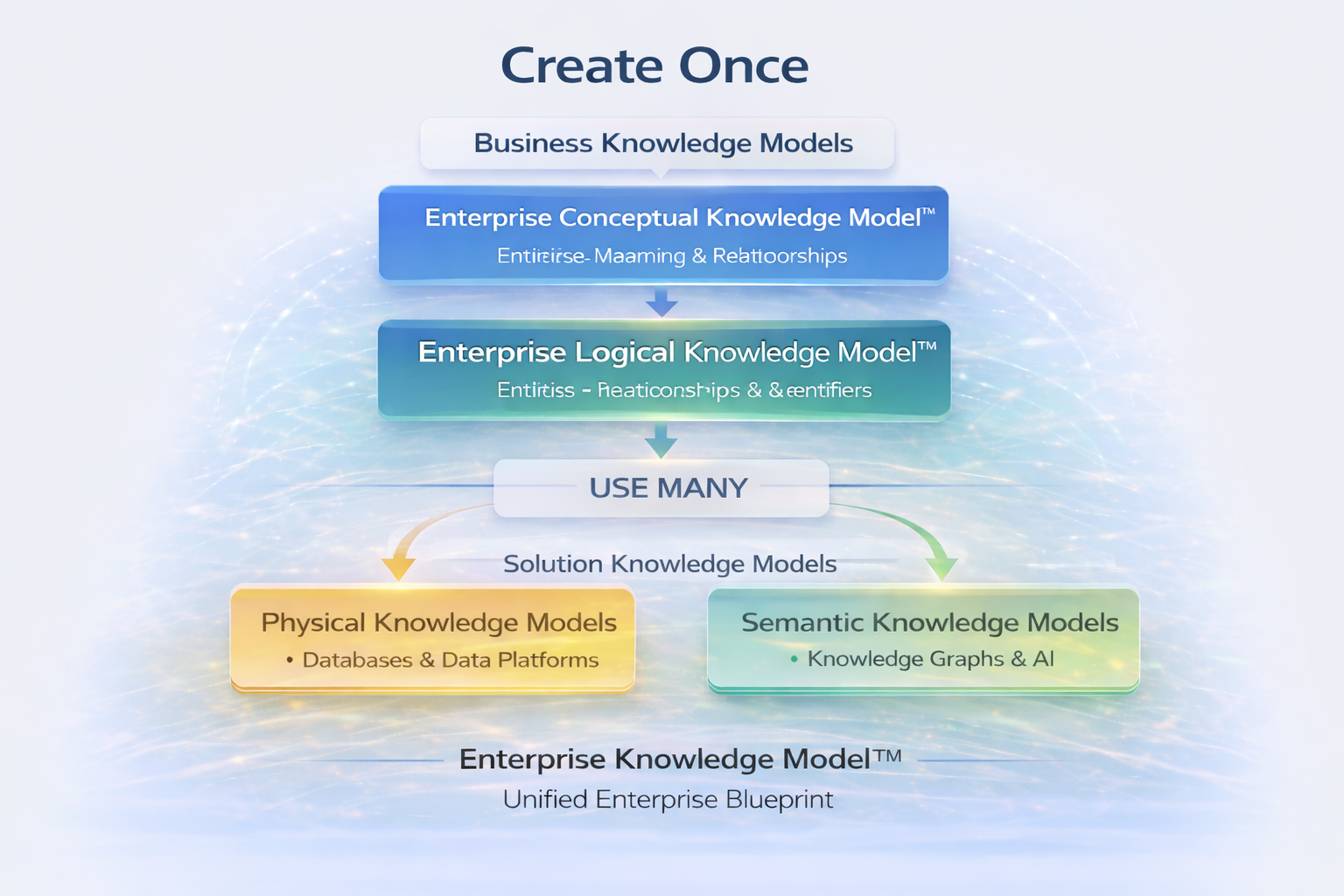
Like a building blueprint, Enterprise Knowledge Architecture™ establishes the structural foundation for reusable enterprise knowledge models.
Organizations define one Enterprise Conceptual Knowledge Model™ that defines the core business meaning of the enterprise.
From that foundation, they establish one Enterprise Logical Knowledge Model™, which formalizes entities, relationships, and business identifiers.
These Business Knowledge Models form the durable enterprise blueprint — the foundation of the Enterprise Knowledge Model™ — from which multiple Technology Knowledge Models can be derived, including:
Physical Knowledge Models™ used by operational and analytical reporting platforms
Semantic Knowledge Models™ (ontology) used by knowledge graphs and AI systems
By defining enterprise meaning before implementation, organizations can reuse these knowledge blueprints across systems, platforms, and domains without redefining the business each time.
This enables enterprises to scale platforms, integrations, and AI initiatives while maintaining structural coherence.
Enterprise Knowledge Architecture™ enables:
Structural alignment across enterprise systems, ERP platforms, and analytics environments
Reduced integration volatility as systems evolve
Controlled domain expansion as new capabilities are introduced
Durable semantic interoperability across data platforms and knowledge graphs
AI-ready enterprise knowledge foundations
Enterprise Knowledge Architecture™ Governing Principles
Enterprise Knowledge Architecture™ establishes a small set of governing principles that ensure enterprise knowledge is defined, structured, and governed before systems, platforms, and AI implementations begin.
These principles ensure that both Business Knowledge Models and Technology Knowledge Models remain aligned within the Enterprise Knowledge Model™.
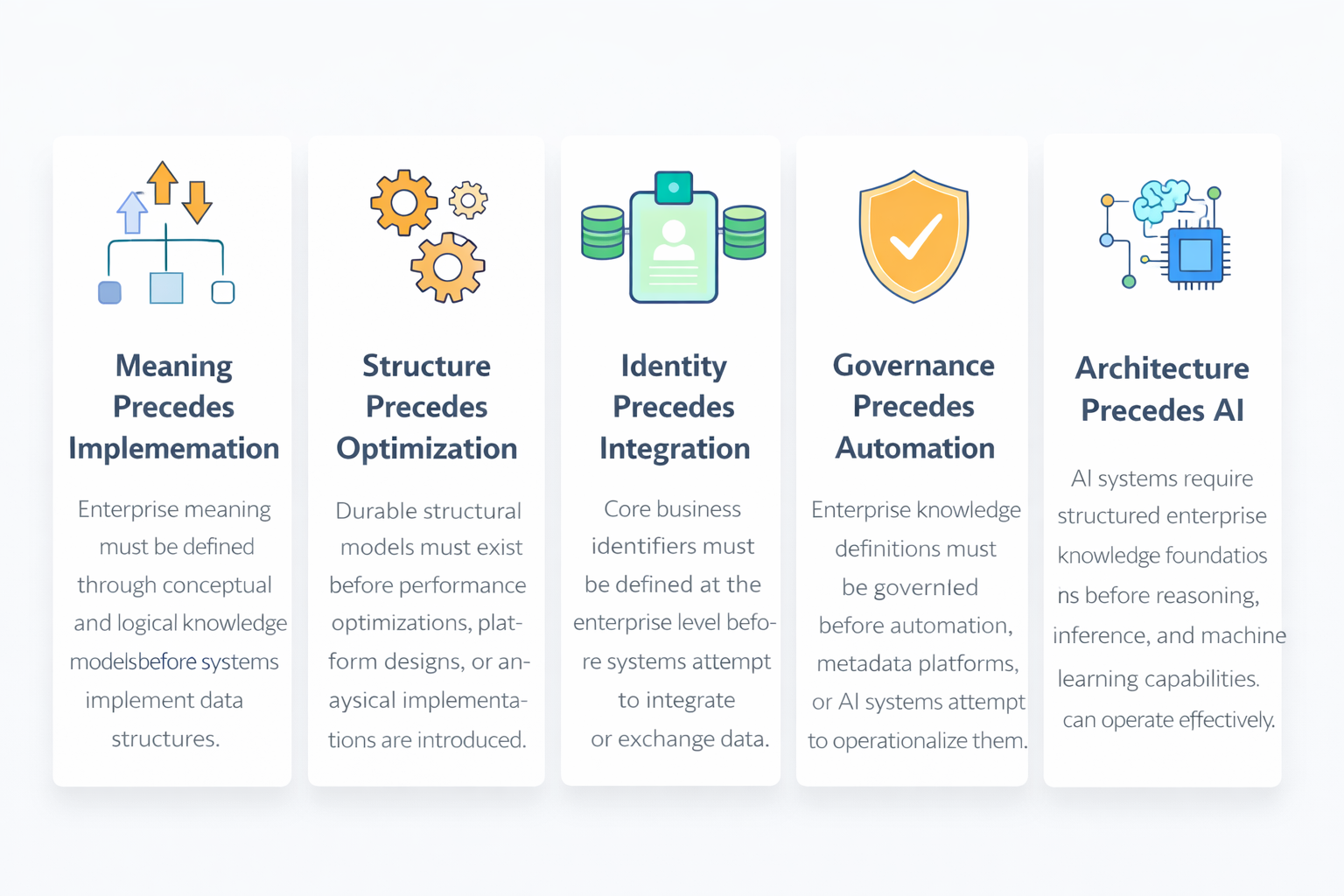
The Structural Discipline of Enterprise Knowledge
Together these principles ensure that enterprise knowledge remains structurally consistent as systems, platforms, and AI capabilities evolve.
The Enterprise Logical Knowledge Model™ serves as the structural bridge from business meaning to all enterprise implementations — enabling both physical data platforms and semantic AI systems from a single governed blueprint.
What Enterprise Knowledge Architecture™ Enables
When organizations implement Enterprise Knowledge Architecture™, the Enterprise Knowledge Model™ becomes a durable structural asset that supports governance, modern data platforms, and AI initiatives.
By defining enterprise meaning before implementation, organizations scale platforms, integrations, and analytics without sacrificing structural coherence.
This approach reduces integration volatility, preserves alignment across domains, and establishes enterprise knowledge foundations that compound in value over time.
Enterprise Capabilities Enabled
Institutionalizing Enterprise Knowledge Architecture™
Organizations adopt Enterprise Knowledge Architecture™ through structured capability programs and industry-aligned enterprise knowledge model accelerators.
These paths enable teams to adopt enterprise knowledge modeling disciplines while accelerating the creation of enterprise conceptual and logical knowledge models.
Choose the path that fits your organization:
Capability Development
Develop internal enterprise knowledge modeling capability through structured training programs and architecture education.
Understand the enterprise blueprint that structures business meaning into reusable, governed knowledge across platforms, analytics, and AI.
Knowledge Model
Industry Accelerators
Accelerate blueprint development using industry-aligned Enterprise Business Common Knowledge Model™ accelerators and reference frameworks.