Architect Enterprise Knowledge Architecture™
A unified structural blueprint for governing meaning across data platforms, semantic systems, and AI initiatives.
Why Enterprise Knowledge Architecture Matters
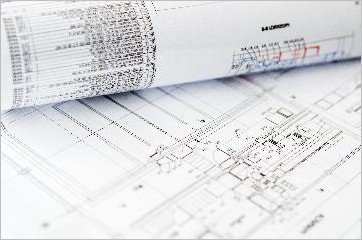
You Wouldn’t Build a Skyscraper Without Blueprints
Enterprises invest millions in Medallion platforms, ERP transformations, and AI ecosystems.
Yet many begin without a structural blueprint of enterprise meaning meaning.
Technology advances.
However, Enterprise meaning fragments.
The Leadership Advantage
When enterprise meaning is defined intentionally:
Acquisitions integrate with apples-to-apples alignment
Divestitures separate cleanly
Vendor platforms align to enterprise definitions — not the reverse
Impact analysis becomes architectural, not reactive
ROI becomes measurable before disruption occurs
You are not reacting to complexity.
You are designing it.
Structural Discipline. Capital Control. Phased Execution.
Enterprise Knowledge Architecture is not a big-bang overhaul.
It begins with foundational master data domains —
Customer. Vendor, Product, Manufacturer.
These form the enterprise structural backbone.
Transactional domains follow only after structural clarity is established —
Orders, Shipments, Inventory, Returns.
Investment becomes phased.
Expansion becomes controlled.
Structural value compounds over time.
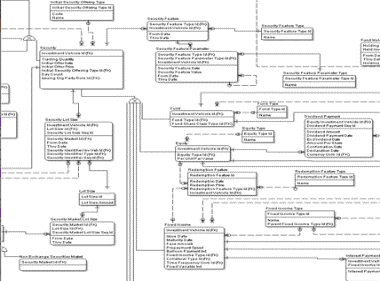
Enterprise Knowledge Architecture™
A governing methodology for designing durable enterprise meaning before systems fragment it.
The Distinction (Methodology vs Model)
Enterprise Knowledge Architecture™
Enterprise Knowledge Architecture™ is the governing methodology that defines how enterprise meaning is designed, formalized, and extended across systems.
It establishes the architectural discipline for structuring knowledge intentionally before technology decisions harden it into fragmented implementations.
The architecture governs principles, sequencing, and structural integrity.
It defines how knowledge models are created — not just what they contain.
— Architecture defines the rules of structural design.
Enterprise Knowledge Model™
The Enterprise Knowledge Model™ is the unified structural blueprint produced through Enterprise Knowledge Architecture™.
It integrates four coordinated Knowledge Model™ components — Conceptual Knowledge Model™, Logical Knowledge Model™, Physical Knowledge Model™, and Semantic Knowledge Model™ — into a single, governed enterprise framework.
While the architecture governs the discipline, the Enterprise Knowledge Model™ embodies the structure.
— The model represents the structured outcome of those rules.
The Enterprise Knowledge Model™ is composed of four integrated Knowledge Model components.
The Four Knowledge Model Components
Conceptual Knowledge Model™
Defines shared enterprise meaning at the business level — identifying core entities, foundational relationships, and semantic boundaries independent of systems.
It establishes structural intent before implementation decisions are made.
Logical Knowledge Model™
Transforms conceptual meaning into formalized enterprise structure — defining identity rules, normalization patterns, and governed relationship constructs.
It is the structural pivot that ensures consistency across implementations.
Physical Knowledge Model™
mplements the Logical Knowledge Model™ within governed data platform architectures, including modern Medallion environments.
It enables tactical delivery while preserving enterprise structural integrity.
Semantic Knowledge Model™
Extends logical structure into ontology-ready representations and knowledge graph foundations.
It enables AI reasoning, governed vocabulary alignment, and durable enterprise interoperability.
Architectural Governing Principles
Meaning precedes implementation.
Structure precedes optimization.
Identity precedes integration.
Governance precedes automation.
Architecture precedes AI.
What It Enables
Enterprise Knowledge Architecture™ enables organizations to scale platforms, integrations, and AI initiatives without sacrificing structural coherence. By governing meaning before implementation, enterprises reduce volatility, preserve alignment across domains, and create durable knowledge foundations that compound in value over time.
Structural alignment across ERP and analytics
Reduced integration volatility
Controlled domain expansion
Durable semantic interoperability
AI-ready enterprise knowledge foundations
Institutionalizing Enterprise Knowledge Architecture™
Organizations adopt Enterprise Knowledge Architecture™ through structured capability programs and industry-aligned knowledge model accelerators.
Training Programs
Modern Data Modeling: From Business Meaning to AI-Ready Data
Available Now
An instructor-led program designed to institutionalize Enterprise Knowledge Modeling methodology — a repeatable framework for designing enterprise knowledge models that support traditional analytics platforms and emerging AI ecosystems.
Participants learn to design:
Conceptual Knowledge Models aligned to business meaning
Normalized Logical Knowledge Models engineered for Medallion delivery
Architecture-ready foundations that support semantic and AI initiatives
The program establishes durable internal capability to implement the Enterprise Knowledge Model™ architecture.
Professional Tool Environment
Labs utilize ER/Studio®, a leading enterprise data modeling platform developed by Idera.
Participants apply conceptual and logical modeling principles within a professional-grade environment used by enterprise modeling teams.
Instruction focuses on modeling architecture and structural discipline; comprehensive ER/Studio product training is delivered separately by Idera.
Advanced Business Common Knowledge Model (BCKM) for Retail Coursework
Future Release
An instructor-led program designed to teach participants different scenarios on how the BCDM can jump-start different solution components of an Enterprise Knowledge Model™ architecture.
By the end of this program participants will be able to:
Jumpstart architectural efforts as the data modeler on a delivery team
Understand and apply the Retail BCDM data pattern structures
Understand the types of common/functional data model constructs available and how to reuse these constructs in data modeling efforts
Understand methods and techniques used to implement the Retail BCDM
Participants will be able to adapt the BCKM into their own Enterprise Knowledge Model™, accelerating blueprint development.
Industry Business Common Knowledge Model™ (BCKM™) Retail CG&S
Coming Soon
A comprehensive industry Enterprise Knowledge Model™ accelerator built on Conceptual Knowledge Model™ and Logical Knowledge Model™ foundations.
The Retail and CG&S BCKM™ provides:
Industry-aligned conceptual domains
Normalized logical entity structures
Advanced enterprise modeling patterns
Organizations will be able to adapt the BCKM™ into their own Enterprise Knowledge Model™, accelerating blueprint development while preserving architectural rigor.
Modern Data Modeling: From Business Meaning to AI-Ready Data
Built on Enterprise KnowledgePrints™ Enterprise Knowledge Architecture™ Framework
Most organizations generate data.
Few design enterprise knowledge.
This program teaches participants how to design Enterprise Knowledge Models™ — durable modeling blueprints that unify governance, Medallion architectures, analytics, and AI beyond individual projects.
Participants don’t just learn modeling techniques.
They learn how to design structural enterprise assets.
What You Will Master
Design Enterprise Conceptual Knowledge Models™
Translate ambiguous business narratives into clear enterprise structures.
Define core entities, relationships, identity, and semantic boundaries — before implementation begins.
Build Durable Logical Knowledge Models™
Apply normalization, resolve many-to-many relationships, define business keys, and implement advanced modeling patterns (supertype/subtype, recursive, associative).
Create structurally sound models that scale.
Generate Physical Knowledge Models™ - Architected for Modern Data Platforms
Generate models that support Bronze, Silver, and Gold Medallion layers based on Logical Knowledge Model
Separate modeling discipline from tool implementation.
Create foundations that inform physical schemas and durable Silver-layer design.
Bridge to Semantic & AI-Ready Structures
Understand how logical models translate into ontology and taxonomy design.
Prepare enterprise knowledge for knowledge graphs and LLM integration.
Align business vocabulary with formal data structures.
The Outcome
Participants leave equipped to design enterprise knowledge assets that serve as reusable structural blueprints — not project-specific diagrams.
Immediate Capability
Establish a shared enterprise knowledge modeling language across business, architecture, and engineering teams
Design reusable Enterprise Knowledge Models that capture business meaning once and serve as the foundation for both relational and semantic implementations
Apply normalization to produce durable Silver-layer logical and physical structures
Define enforceable business identity and semantics integrity
Resolve advanced enterprise modeling patterns (supertypes, recursive, many-to-many) with architectural confidence
Strategic Alignment & Longevity
Understand how to translate Enterprise Knowledge Models into ontology-ready semantic representations
Align enterprise taxonomy and business vocabulary with structured data design
Structure knowledge models for AI / LLM reasoning readiness
Support Medallion architecture delivery while avoiding short-term design decisions that sacrifice AI semantic clarity
Bridge relational implementations and knowledge graph initiatives without rework
This program enables organizations to “create once, use many” — establishing an Enterprise Knowledge Foundation that endures as platforms, technologies, and AI capabilities evolve.
Modern Data Modeling: From Business Meaning to AI-Ready Data
Audience Profile
This program is designed for professionals accountable for enterprise data structure — not just implementation.
Who This Program Is For
Designed For
Data architects and senior data modelers responsible for enterprise design standards
Senior data engineers influencing structural data decisions
Analytics and data platform leads aligning modeling with Medallion architectures
AI and semantic architecture leaders bridging structured and knowledge-based systems
Governance leaders and data product owners establishing durable enterprise standards
Enterprise teams seeking a reusable modeling foundation that supports both analytics and AI
Not Designed For
Entry-level practitioners seeking introductory database training
Tool-focused implementers looking for product-specific instruction
Teams seeking product-specific or vendor-focused technical tutorials
Pipeline-only engineering roles without design accountability
This program focuses on modeling discipline, architectural thinking, and enterprise knowledge design — not software mechanics.
Delivery Format & Duration
Modern Data Modeling: From Business Meaning to AI-Ready Data is delivered as a live, instructor-led experience designed for real enterprise application — designed for real enterprise application rather than passive consumption.
The program is offered in two formats to support both enterprise teams and open cohort participants.
Instructor-Led | On-Site
Duration
Three consecutive days
Approximately 6 hours per day
Each session combines:
Structured instruction
Applied modeling workshops
Architectural discussion and enterprise context
Instructor-Led | Live Online
Delivered virtually in real time with direct instructor engagement.
Participants:
Engage in guided modeling exercises and applied case scenarios
Work through conceptual and logical design patterns
Receive live feedback and discussion throughout the program
Designed to replicate the rigor and interaction of in-person instruction.
Delivered at your organization for dedicated team engagements.
Designed to:
Align business and technical stakeholders around a shared modeling language
Establish a consistent enterprise knowledge blueprint
Apply modeling patterns directly to your domain and data landscape
Ideal for organizations formalizing data foundations to support governance, analytics, and AI initiatives.
Technology Alignment & Strategic Training Relationship
Enterprise KnowledgePrints aligns its modeling programs with professional-grade enterprise platforms used by global organizations. These relationships support practical application while preserving methodological independence.
Strategic Training Relationship with Idera (ER/Studio)
Enterprise KnowledgePrints maintains a professional training relationship with Idera, the creators of ER/Studio®, a leading enterprise data modeling platform.
As a listed training partner, EKP programs incorporate ER/Studio during hands-on lab exercises to reinforce conceptual and logical modeling principles within a professional modeling environment.
Instruction focuses on enterprise modeling discipline, architectural structure, normalization, and identifier design. The program does not provide comprehensive product feature training.
Idera offers separate in-depth ER/Studio product training. Enterprise KnowledgePrints operates independently and is not owned by or affiliated with Idera beyond this professional training relationship.
How ER/Studio Is Used in EKP Programs
During lab exercises, participants:
Create conceptual entities and relationships
Define logical attributes and unique identifiers
Generate relational tables from logical models
Apply normalization and structural modeling patterns
Learn how to use the Logical Knowledge Model™ as the foundation to semantic model creation
Limited tool guidance is provided to support modeling execution within the tool.
The emphasis remains on modeling architecture and enterprise knowledge structure rather than product administration or advanced feature configuration.
Methodology First. Tools Second.
Enterprise KnowledgePrints is tool-aligned but methodology-driven.
The Enterprise Knowledge Model™ architecture can be applied across modeling environments and technology stacks. ER/Studio is utilized as a professional modeling environment within current programs.
This ensures participants develop durable modeling capability that extends beyond any single platform.

About Enterprise KnowledgePrints
Enterprise KnowledgePrints advances the discipline of enterprise knowledge architecture by institutionalizing structured modeling methodology within modern organizations.
Our programs institutionalize structured modeling methodology — equipping organizations with durable conceptual and logical knowledge models that support governance, Medallion delivery, analytics modernization, and AI-driven semantic initiatives.
Through the Enterprise Knowledge Model™ architecture, we bridge business meaning and technical implementation, enabling enterprises to design reusable knowledge foundations rather than isolated data artifacts.
Enterprise KnowledgePrints operates at the intersection of architecture, knowledge modeling discipline, and enterprise enablement.


Book a Session
Booking a session is simple. Select an upcoming live cohort to view dates, pricing, and availability.
All sessions are delivered live and instructor-led.
Refund and cancellation policies are available during registration.
Contact Us
For enterprise inquiries, private cohort requests, or partnership discussions, please reach out directly.

What Our Clients are Saying

“Their workshops transformed our team’s communication and productivity in just weeks.”
-- former client

“The custom curriculum they designed exceeded accreditation standards and engaged our students like never before.”
-- former client
Follow Us On Social